


A house in the mountains: heating and winter living
In summer a mountain house feels like paradise; in winter it puts its owner to the test. Here is how to heat it, how to stay warm and what to check before you buy.
Contents
Winter in the mountains is different
In Dilijan, Tsaghkadzor, around Sevan and in mountain villages, winter is longer and colder than in Yerevan, and snow can lie for weeks. A house that is comfortable in July can be cold and expensive to run in January. So judge it first and foremost as a winter home. Many problems of a mountain house are visible in advance: damp and mould in the corners, walls that freeze through, gaps around windows. If you can, view the house in the cold season.
Heating options
| Option | Pros | Cons |
|---|---|---|
| Gas boiler | Convenient, automatic, familiar | Needs gas on the street; many boilers stop without electricity |
| Wood or combination stove | Independent of the grid, cosy | You must stock firewood, stoke it by hand and look after the chimney |
| Electric heating | Easy to install | Expensive for large areas, limited by connection capacity |
| Heat pump | Economical to run | Costly to install, less efficient in hard frost |
| Solar panels | Cut electricity bills all year | Less sun in winter; they will not fully replace heating |
For reference: in 2026 household electricity costs 44.98 AMD per kWh by day and 34.98 AMD at night, and 29.99 and 19.99 AMD for socially vulnerable families (PSRC decision, as of 30 December 2025). The cheaper night rate favours systems that store heat overnight. The PSRC left household gas tariffs unchanged in 2026; check the exact price for your address with the supplier.
Solar panels
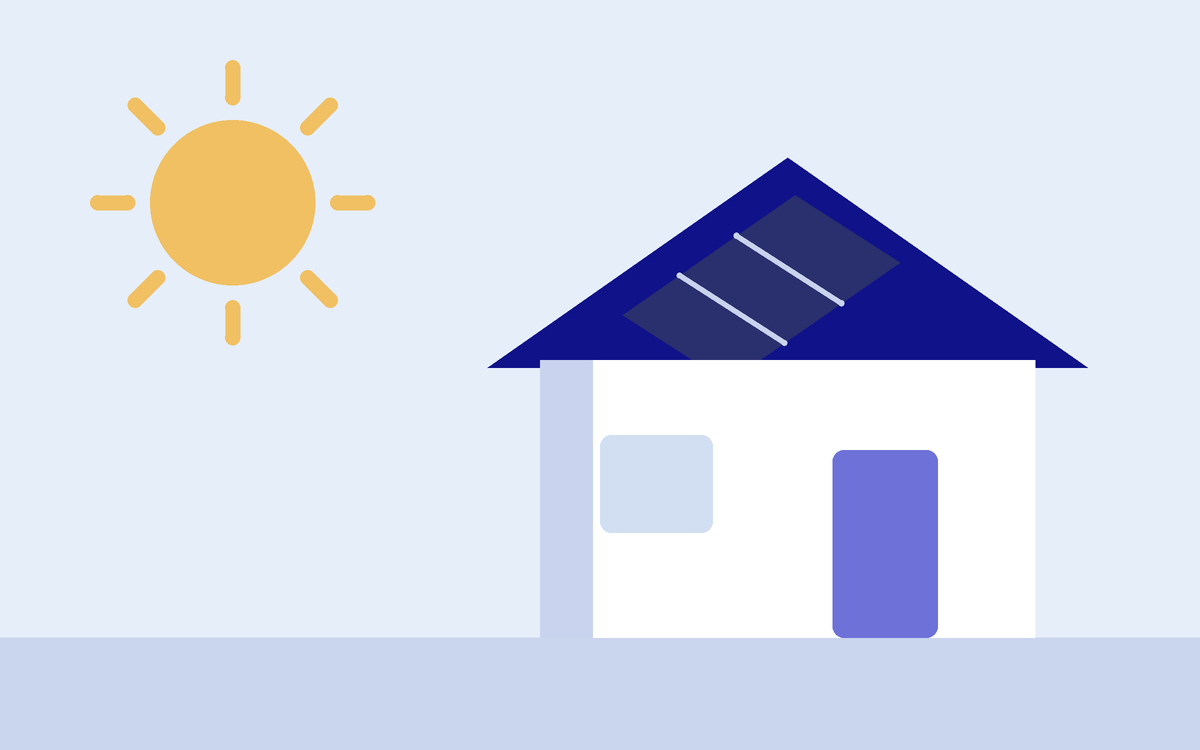
A private house in Armenia can become an autonomous electricity producer: under net metering you can install a plant of up to 150 kW for your own needs and export the surplus to the grid. Such plants are popular: according to the trade publication pv magazine, the country already has more than 50,000 autonomous producers, and the number of household plants grew by 60% in 2025.
For a mountain house this is a good way to cut bills but not the only source of heat: winter days are short and panels under snow produce nothing. Treat a solar plant as a supplement to your main heating. Before installing, ask the network company how to connect the plant to the grid and which meter you need, and ask the installer how much energy the panels will produce in winter on your particular slope.
Insulation first
Any heating system is wasted if the heat escapes through gaps. Before choosing a boiler, look at the house itself. Money spent on insulating the roof and windows often pays back faster than a new boiler.
- The roof and attic are among the main places heat is lost.
- Windows: old frames are best replaced or well sealed.
- Walls and floor: external insulation and underfloor heating on the ground floor.
- An entrance porch is a simple way to keep out draughts and snow.
Winter living: a checklist
- Who clears the road to the village and to your plot, and how quickly.
- How the pipes are protected from freezing: insulation, heating cable, a way to drain the water.
- A stock of firewood or fuel for the whole winter and a dry place to keep it.
- Connection capacity: will it cope with heaters during a cold snap?
- Mobile signal and internet in the house in winter.
- The nearest pharmacy, shop and hospital, and the road to them in snow.
Buy firewood only from legal sellers: unauthorised logging is prohibited. And ask the seller for last winter's bills; they will show more honestly than any promise what it costs to heat the house.
Key takeaways
- Judge a mountain house as a winter home: snow, roads, pipes, heating.
- Insulate first, then choose a boiler or stove.
- Solar panels cut bills but do not replace your main heating.
- Keep a backup heat source in case the power goes out.
- ARKA — тарифы на электроэнергию для населения в 2026 году не изменятся (КРОУ, 30 декабря 2025)
- ARKA — тарифы на газ для населения не изменятся (КРОУ, 1 июля 2026)
- pv magazine — Armenia adds around 615 MW of solar in 2025 (5 февраля 2026)
- Фонд энергосбережения и возобновляемой энергетики Армении — солнечная энергетика