


A Yerevan apartment interior: light, tuff and summer heat
Yerevan is a city of sun and pink tuff, with hot dry summers and frosty winters. Here is how to reflect that in your interior, from curtains and wall colours to tuff finishes and evening lighting.

Contents
The climate we are designing for
In July and August the average daytime high in Yerevan is about 34 °C, and on peak days it goes above 40: a record 42 °C was reached in August 2011 and July 2018. In summer the sun shines for more than 11 hours a day on average. In winter, by contrast, January nights drop to about −8 °C on average.
The International Energy Agency projects that cooling demand in Armenia’s buildings will roughly quadruple between 2020 and 2036. Put simply, sun protection and air conditioning are becoming standard rather than a luxury, and they are worth planning from the start, not after the first hot July.
Protection from the sun
- South- and west-facing windows are the main source of summer overheating: they need heavy curtains, blinds or roller blinds
- Solar control film or double glazing with low-emissivity glass reduces heat gain without darkening the room too much
- External awnings and shutters work better than curtains because heat never gets inside; but in Yerevan anything that changes the facade must be approved by the municipality
- Plants on the balcony and by the window give shade and a little coolness
Colour and materials
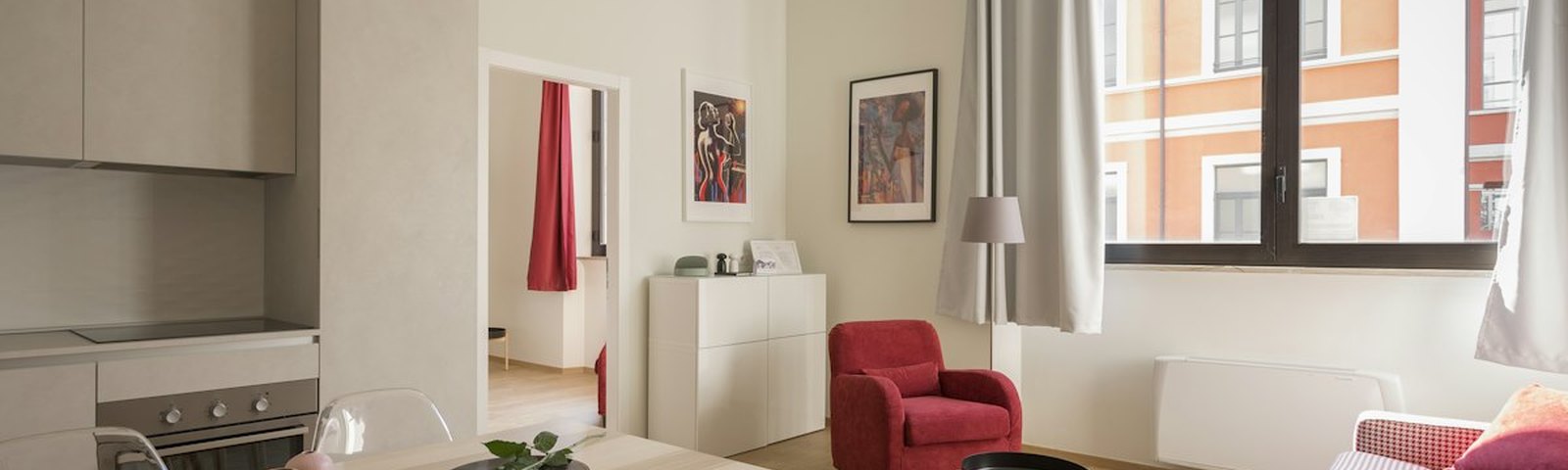
Light, warm walls — white, sand, cream — reflect light and make a room feel cooler, and they do not look grey in bright sun. Keep dark accents for textiles and furniture that are easy to change.
Tiles and natural stone feel pleasant underfoot in the heat, especially in the living room and kitchen. In bedrooms and children’s rooms wood or laminate is better: it is warmer to walk on barefoot in winter. Natural fabrics such as linen and cotton are more comfortable than synthetics in hot weather.
Tuff in the interior
Tuff is a volcanic rock formed from ash and pumice, and much of old Yerevan is built from it. According to Armenian Geographic, the Armenian Highlands have about 28 shades of tuff, from yellow and pink to black. The famous pink tuff is quarried in Artik, and the architect Tamanyan chose it so that Yerevan would become a city of the sun that changes colour through the day.
Tuff is light and easy to work, and its porous structure helps a house hold its temperature: stone houses are cooler in summer and warmer in winter. But the same porosity means tuff absorbs moisture.
- A tuff wall or niche in the living room, or tuff cladding on a fireplace or arch, makes a striking accent
- In the kitchen and bathroom, tuff needs a protective sealant — or choose another material
- If an old tuff house has exposed masonry, don’t cover it with dense paint that blocks vapour
- Tuff pairs well with wood, linen, ceramics and copper
Lighting
Yerevan has plenty of daylight, so the main daytime task is to avoid overheating while keeping the space bright. Build artificial lighting in three layers: general (ceiling lights), task (over the worktop, desk and mirror) and accent (lighting for niches, shelves or a tuff wall). Warm-white lamps in the evening go well with stone and wood.
Key points
- Design your apartment for a hot, sunny summer and a frosty winter
- Sun protection for windows comes first; get external solutions approved by the municipality
- Light walls and tiles help in the heat; bedrooms need warm floors
- Tuff is a beautiful, breathable material, but it needs protection in wet areas
- Light in three layers, with warm lamps in the evening